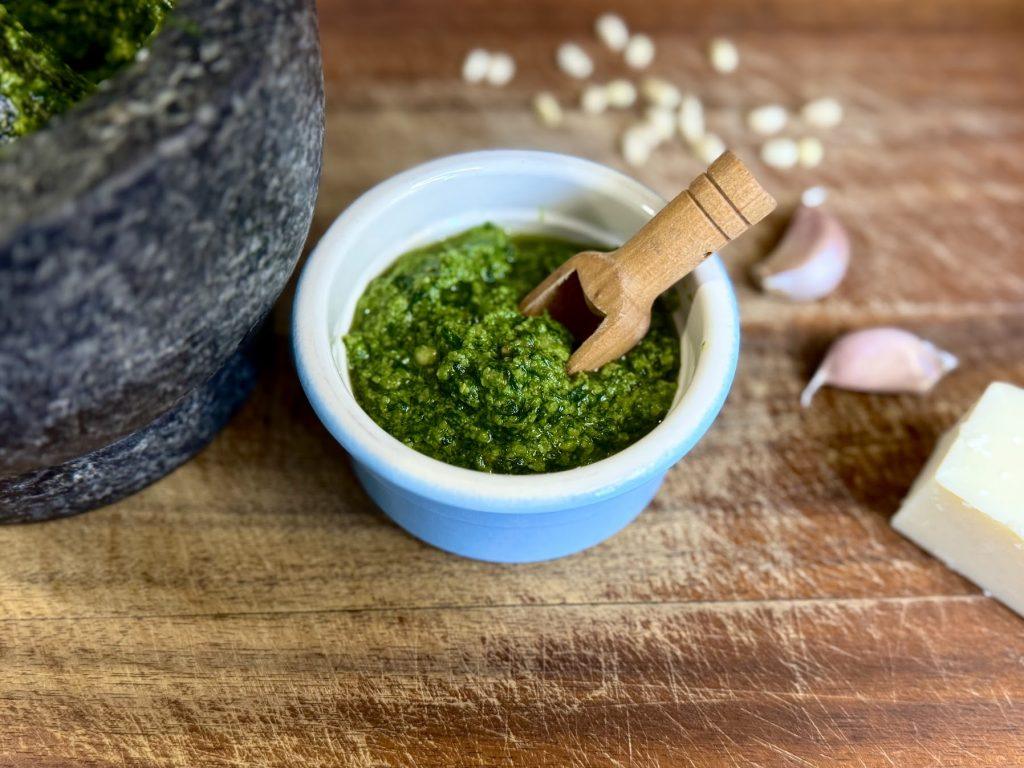

Creamy, fragrant & vibrant Pesto alla Genovese. Delicious to use in salads, on pasta or as a topping on sandwiches or pizzas. Making your own is very rewarding! All of the ingredients for this are very accessible and the process is extremely easy. This can be made in a batch using either a blender or a pestle and mortar. If you like Italian food you should look at some of my other Italian recipes, such as spaghetti carbonara or lasagna
What is Pesto alla Genovese
As the name might suggest this pesto origintes from Genoa, a city in Liguria in the north of Italy. This is just one of a broader category of Italian pestos. These are typically pastes made up of herbs, aromatics, nuts, chees and fat. These pastes get their name from the Italian verb, pestare, meaning to crush.
Pestos are derived from much older sauces made in Italy. The Romans had a strikingly similar dish called moretum. This was a paste made with herbs, cheese, salt, oil and vinegar. As you can see, it is almost exactly the same! These kinds of pastes spread (pardon the pun) around Italy, and now many regions have their own type of pesto.
Basil is originally from India, however it made it’s way to Italy in antiquity and has been cultivated there ever since. No place in Italy is more famous for it’s basil than Liguria, and specifically Genoa. It is no surprise then that basil is the leading ingredient in pesto alla genovese. This is completed with olive oil, Parmigiano-Reggiano, pine nuts, garlic and salt to make the world famous pesto. This article is great for a further read.
Making this Recipe
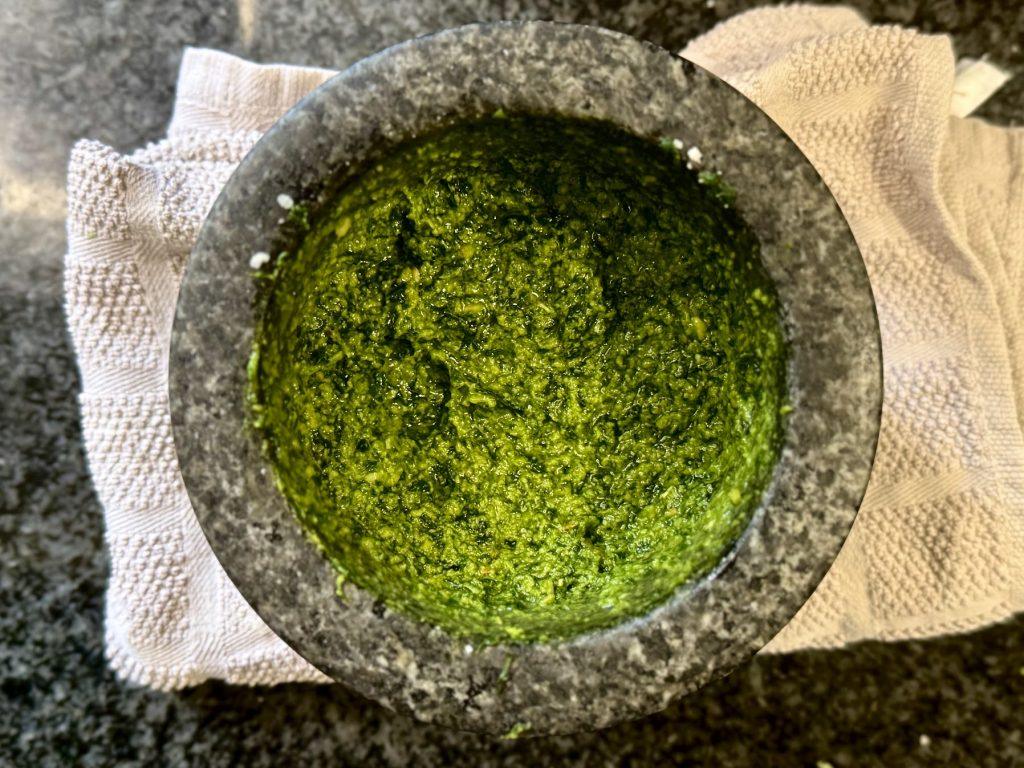
This is not a overly complicated recipe. There are 6 ingredients and they just need to be mixed and crushed into a paste. You can make this either in a food processor, or in a pestle and mortar. I would highly recommend doing the latter! Purists will always say it should be made by hand this way.
This is largely for two reasons. Firstly, it leads to the best texture. This is because it allows for better expression of the oils from the garlic and basil to create a creamier consistency. Secondly, this also allows for a more even flavour extraction from the ingredients without potential reactions with metal blades or impact of the heat generated by a food processors motor.
If you are making this by hand, there is an order. You want to start with garlic and salt to get a finde paste, then add the leaves in batches. You want the leaves to be broken down fully and all their oils crushed out. Next, add the cheese and grind it into the paste. Finally, toast and add the pine nuts. These can be crushed so that there are still some small chunks left. Finally you can pour in the oil steadily while mixing to combine into the final pesto.
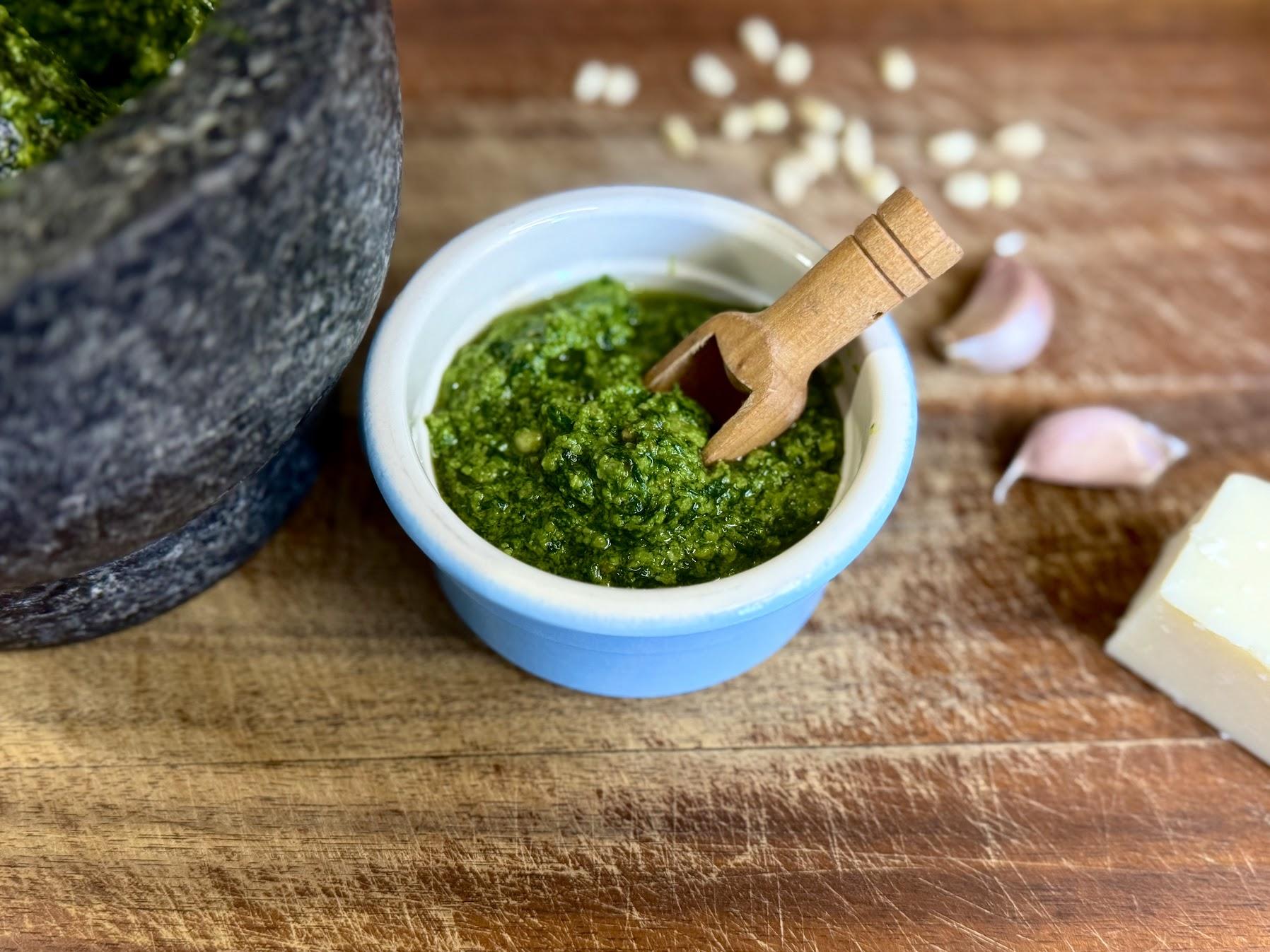
Authentic Pesto alla Genovese
Ingredients
Method
- Add the garlic and salt to a pestle and mortar and crush it into a fine paste.
- Add the basil leaves in batches, one handful at a time. Crush each handful in turn in the mortar until the leaves are broken down the the oils have released.
- Once the basil leaves are all crushed, grate the cheese and add it in too. Crush again to incorporate.
- Toast the pine nuts over a hot pan for 30 seconds to a minute. They will go a nice brown colour and smell very aromatic. I think they smell a bit like popcorn.
- Add the pine nuts to the mortar and grind into the paste. You want them to be mostly broken down and smooth, but with some coarse bits remaining.
- Finally, pour in the olive oil gently while mixing with the pestle to combine into a smooth pesto and serve!



Leave a Reply