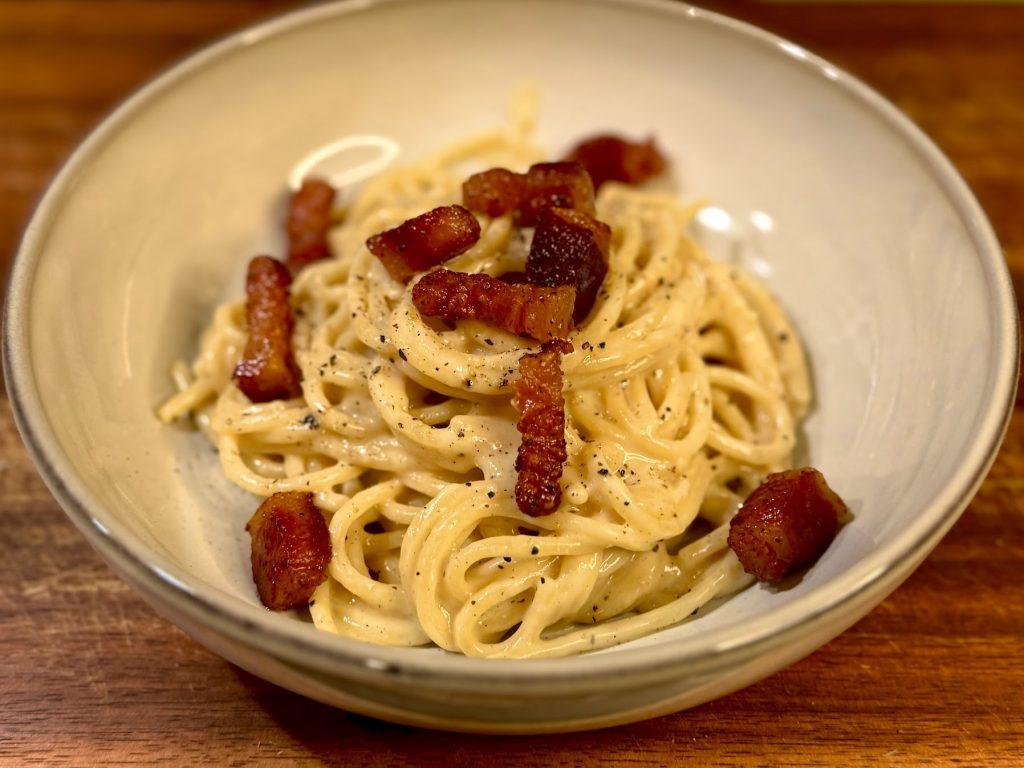

Spaghetti Carbonara is a truly classic dish. It’s amazing how 5 ingredients can come together to make something so special! This is a perfect date night recipe. This dish is so rich and decadent! It’s worth spending a bit more for top quality ingredients to really get the most from this. If you like this, try some of my other traditional pasta recipes such as my arrabbiata or lasagna!
The History Of Spaghetti Carbonara
Carbonara is one of the 4 main Roman pasta dishes. These are cacio e pepe, alla gricia, amatriciana and then carbonara. They are all closely related and use many of the same ingredients, but this one is the most famous for sure. For a dish with such a reputation and reknown, the origins of spaghetti alla carbonara are actually quite controversial and disputed! There are two main theories around the origins of the dish. The one thing they all agree on is that carbonara is indeed a Roman pasta!
The first states it actually originated towards the end of the Second World War. At this time Italy had been both a combatant and then battlefield for years, and food was very scarce! There was an abundance of Allied soldiers in Italy though, who brought with them army rations including eggs and bacon. These became a key part of the food economy in Italy. The story goes that these were then used by chefs to enhance their local dishes.
The other theory claims that the dish comes from an earlier period. The dish came, according to this theory, from charcoal burners in Lazio. The name itself is supposed to indicate that it came from these charcoal burners, called Carbonari. They are said to have made simple dishes from the basic ingredients they had. Eggs, cheese and cured pork were all readily available and cheap!
One thing is for certain. In the 1950s the dish blew up in popularity and established itself as the cultural icon it is today! It has grown into a cornerstone of Italian cooking and representative of their cooking philosophy.
My Recipe
This is a recipe that aims to be authentic. This means it is very minimal and specific in it’s ingredients. Some people like to use onions or garlic, and many like to put cream in their sauce. This is fine if you want to, but it isn’t carbonara in that case. All the creaminess you should need will come from the emulsificaion of the cheese and egg yolk into starchy pasta water.
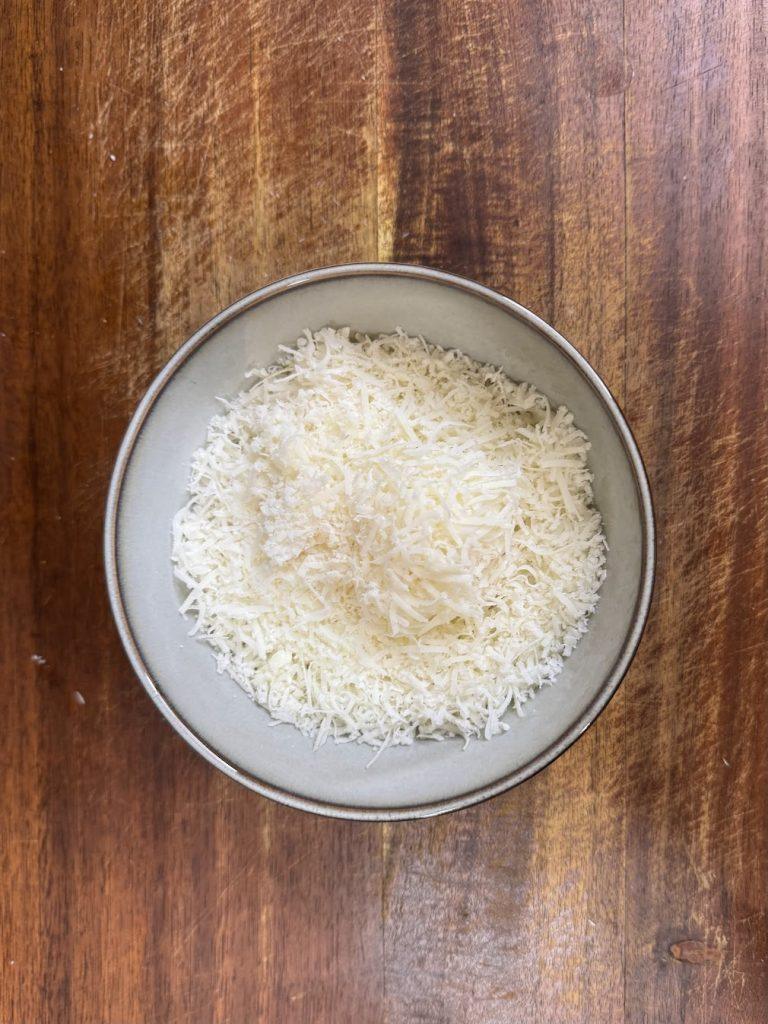
The cheese is important too. Traditional recipes call for pecorino romano. As the name suggests, this comes from Rome too! Pecorino is a hard cheese, similar to parmesan. It is, however, a sheeps cheese rather than cows cheese and has a much different flavour. It is sharper and saltier, and less sweet and nutty than parmesan. Some recipes call for half and half, but I think traditional really is best with this dish!
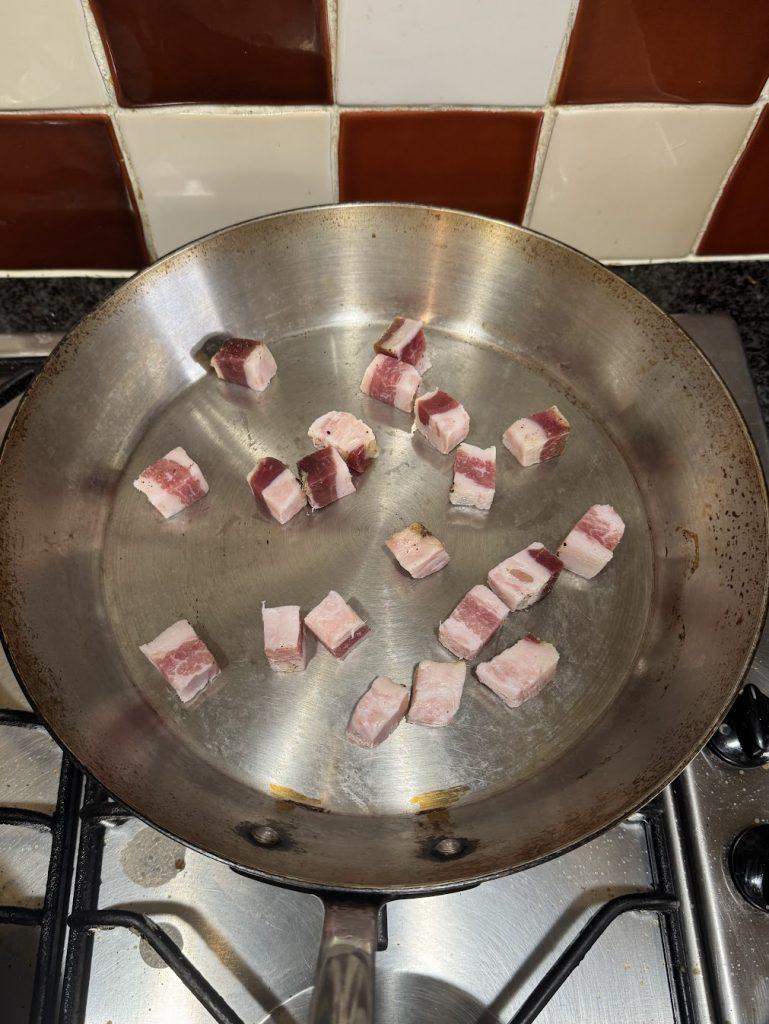
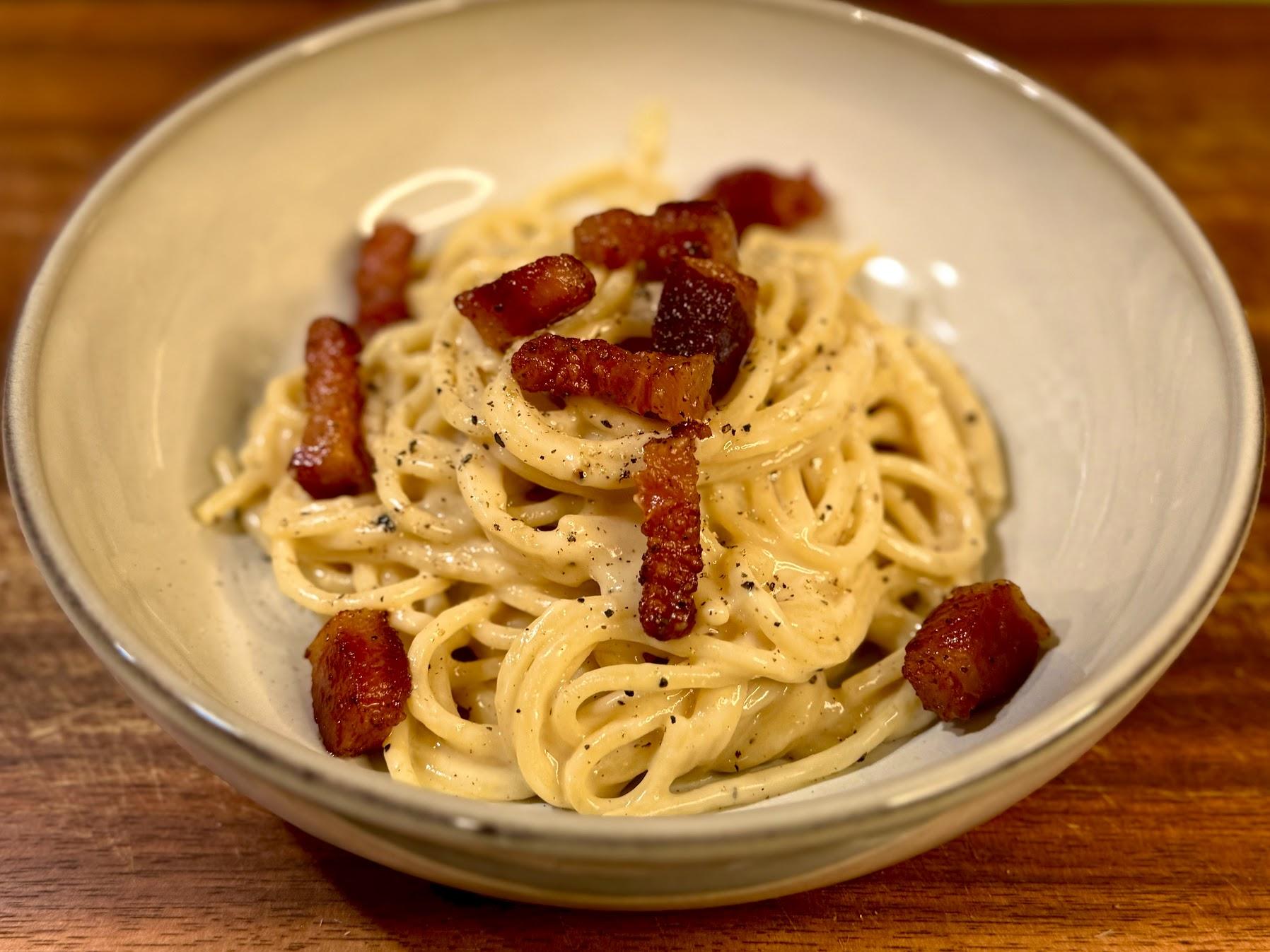
The final and possibly most important ingredient is the meat. I use guanciale for my recipe, as per tradition. This is a peppered and cured pork cheek, and it is very unique. You cannot replace it bacon or pancetta instead, as they do not come close in flavour. Guanciale has a richness, saltiness and pepperiness that the others cannot imitate. It can be very difficult to find, but Italian delis will stock it and it can be bought online. I like to cut mine into large, thick cubes. This allows you to render out plenty of fat and crisp up the outside nicely, while keeping some softness and meatiness in the centre.
Spaghetti Carbonara. Traditional & Authentic
Ingredients
Method
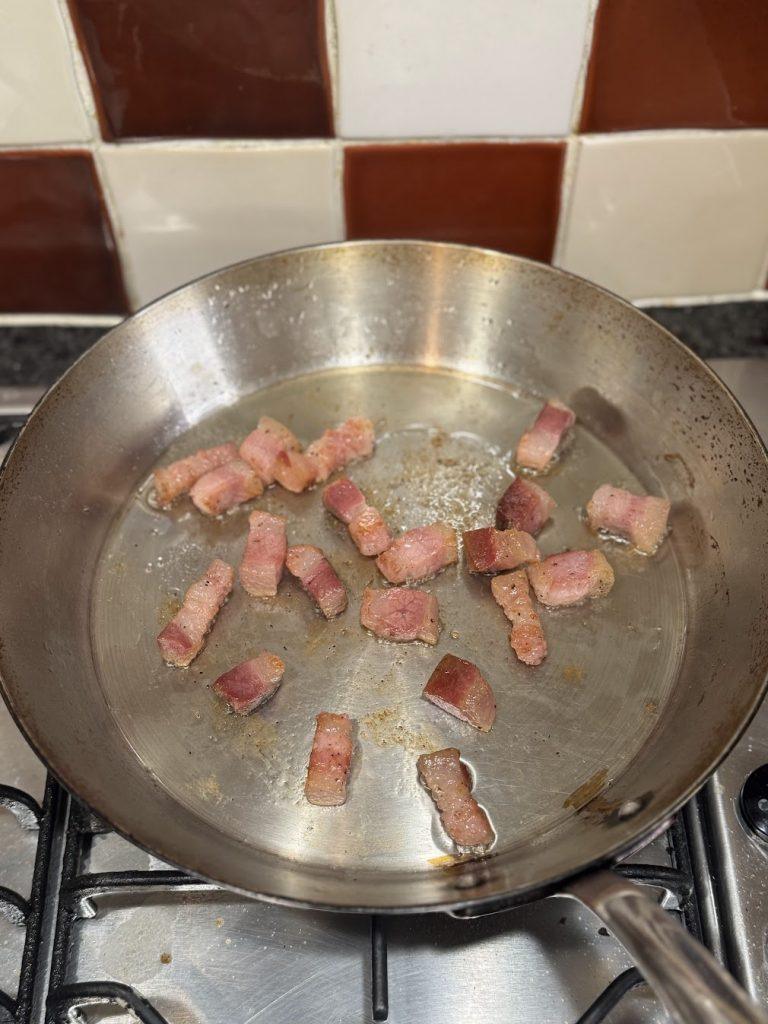
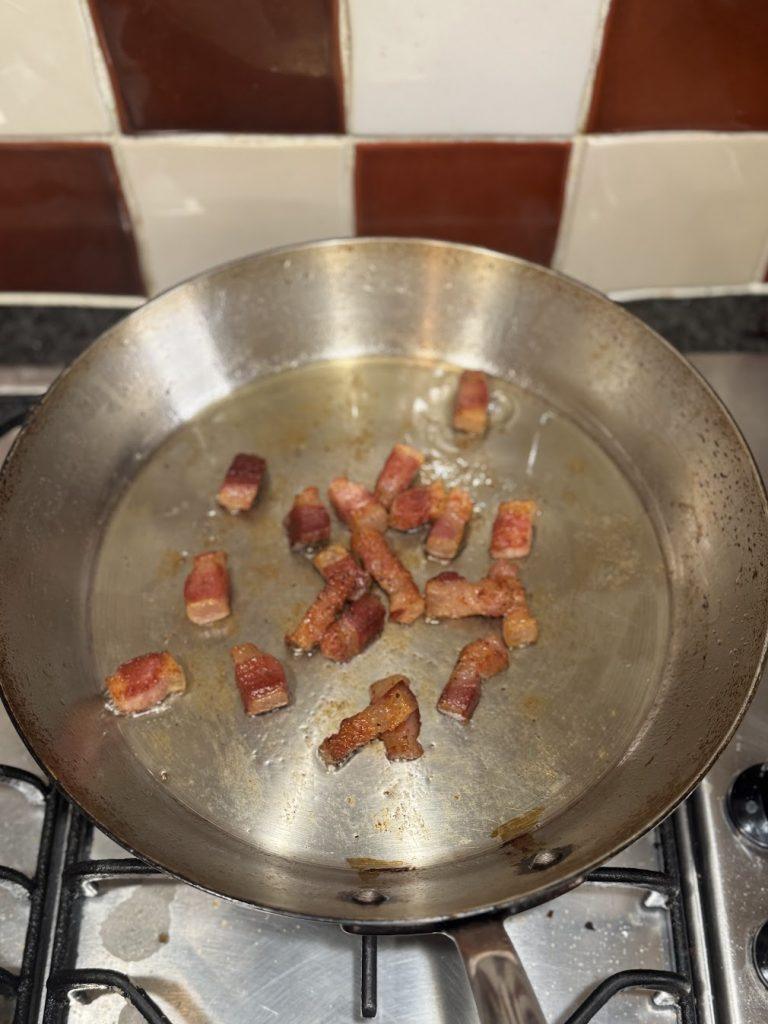
- Cut your guanciale into large, thick pieces, 1-2cm. Ensure to remove the skin and the peppered exterior before doing so. Add to a cold pan and turn on the heat to medium high. Allow the fat to slowly render out, stirring regularly to let the meat crisp up evenly.
- Put the spaghetti on to boil, and cook for 1-2 minutes less than packet instructions. A minute or two before the pasta is cooked, collect a cup of pasta water and save for later.
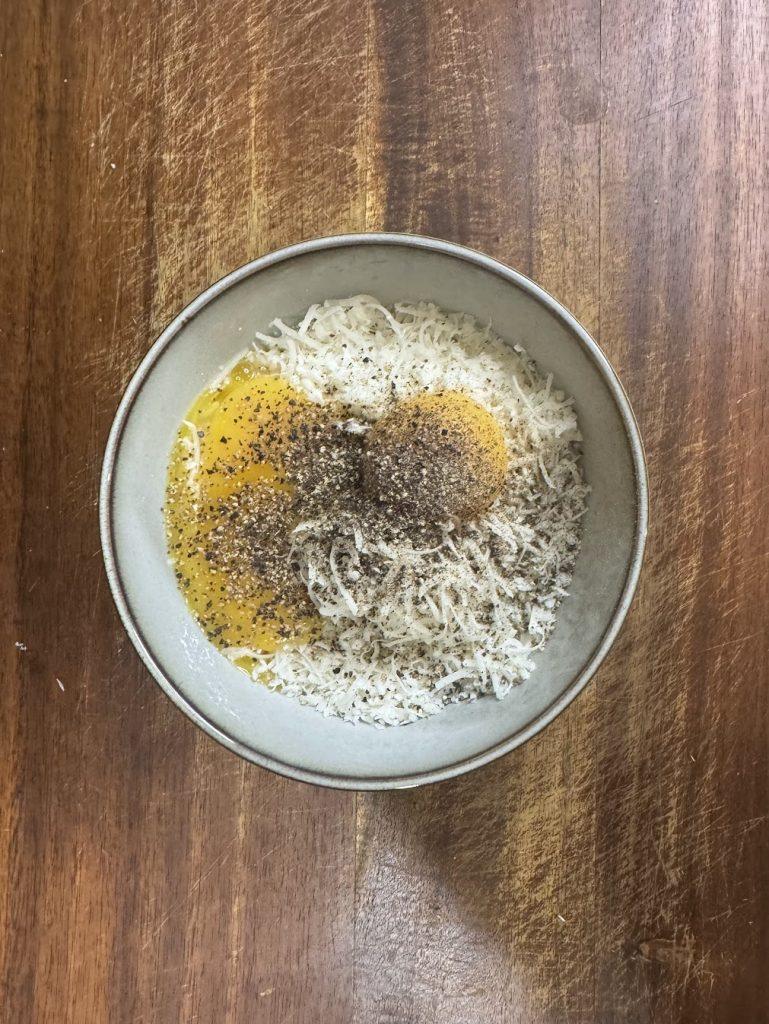
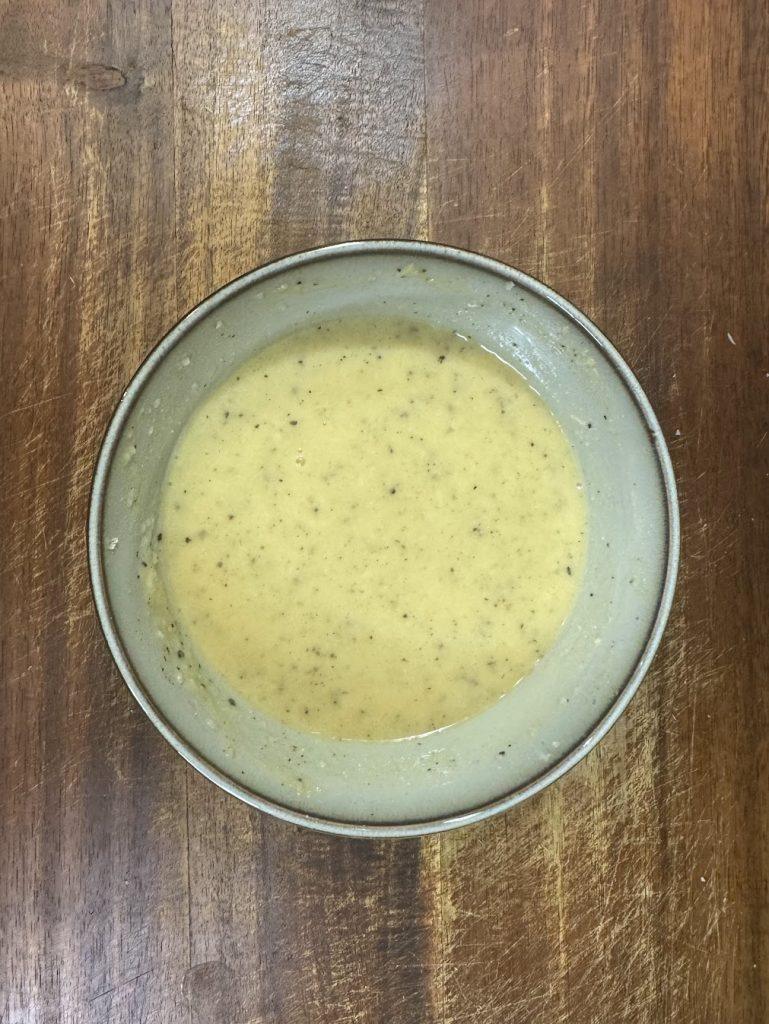
- Grate the pecorino and mix it in a bowl with the egg yolks and ground black pepper.
- Add a few spoonfulls of the fat from the guanciale to the eggs and mix well. Add a few spoonfulls of the pasta water too and do the same. This will temper the eggs to prevent them from scrambling later and start the emulsification.
- Remove the guanciale from the pan once cooked and drain off around half of the fat. Turn the heat off.
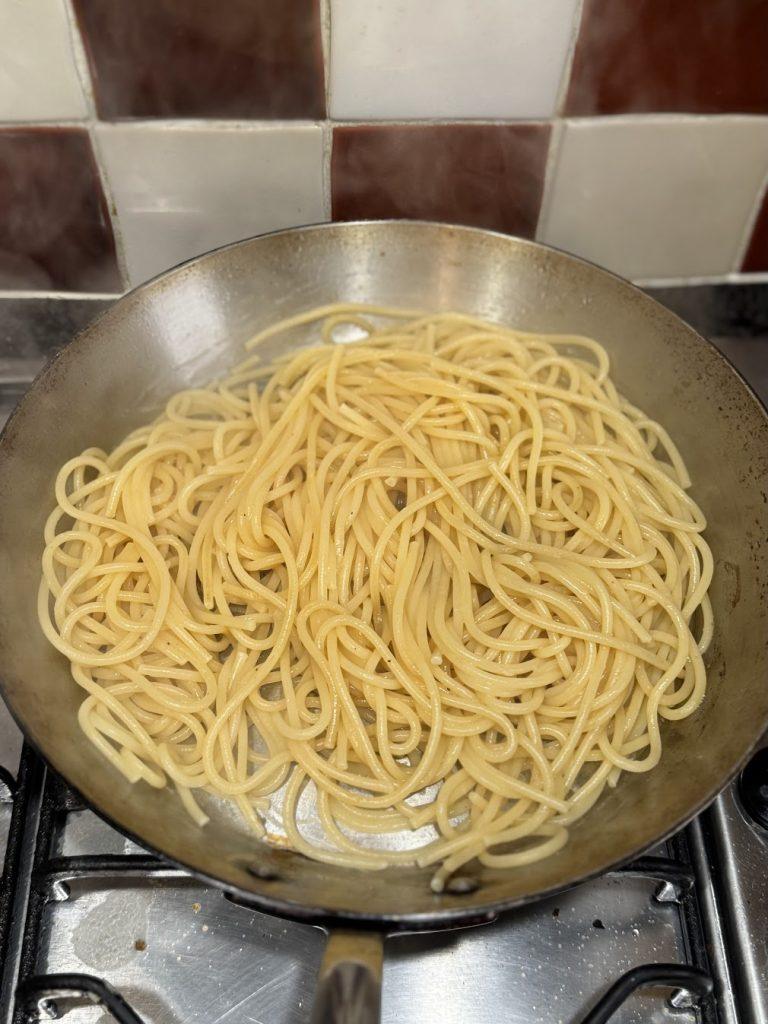
- Once the pasta is ready, remove it from the water and add it straight into the guanciale pan. Toss the pasta in the remaining fat to coat evenly.
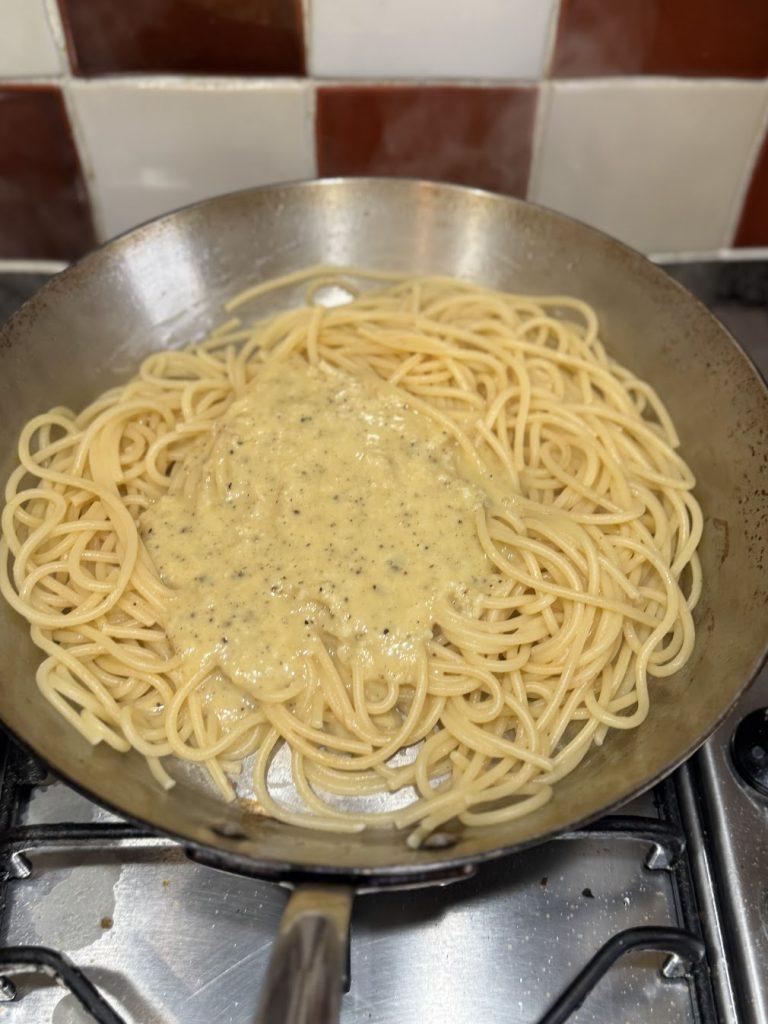
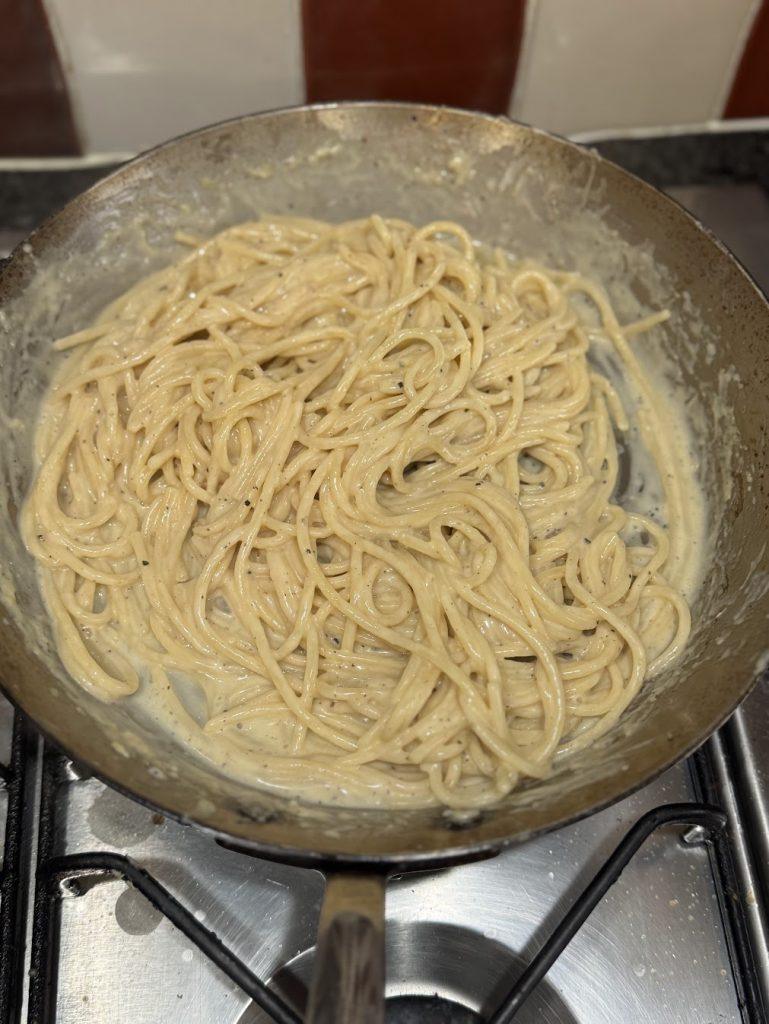
- Add the egg and cheese mix to the pasta and mix well immediately. The residual heat will cook the eggs. Use the remaining pasta water to thin the sauce out if needed, or add extra cheese to thicken if needed.
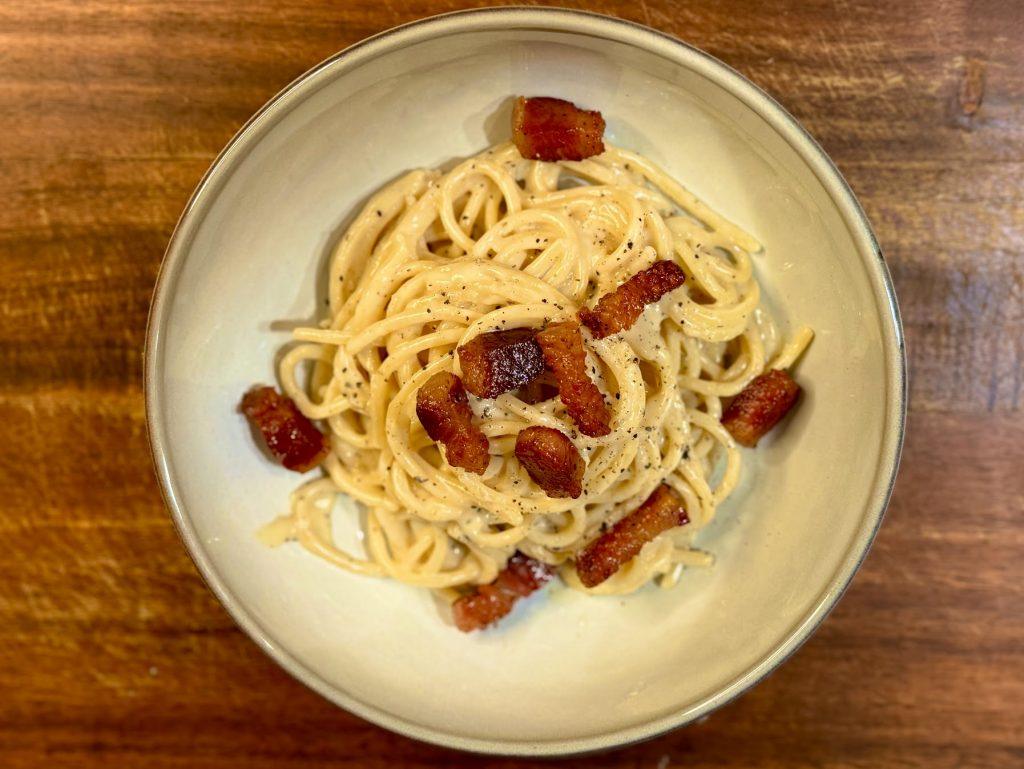
- Portion the pasta into bowls, scatter the guanciale cubes on top and finish with freshy ground black pepper or freshly grated pecorino as desired!

Leave a Reply